WLM Diva - Two Models, Two Perspectives


For our article about the WLM Diva's, I asked our Melbourne representative to share his thoughts on the WLM Diva Monitors and I would then add my input about the WLM Diva Floorstanders.  There are only a couple of reviews in English about these great speakers so we really wanted to share our thoughts on what we think is a very under appreciated speaker.

So firstly here is what James thinks of these great speakers - 

Diva! The name asks, no, demands to be commented on, doesn’t it? It’s not a name destined to fade into obscurity like so many do. I’m sure, no reviewer could resist the urge to make a play of it. Well neither can I.

Diva- what does that conjure for you? Mariah Carey? Sumi Jo? Ella Fitzgerald? Well if we were to play a game of word association, my response to ‘Diva’ would be my wife who happens to be an extremely talented amateur singer. I know I am about to enter into dangerous ground, so let’s tread carefully. The word Diva has its roots in the Italian word dive which roughly translates as goddess (you see darling why I am thinking of you). It came to be a term used to describe female opera singers of rare talent.  In more popular usage it can refer more to a singer’s behavior than her talent. Demanding, fussy, very particular, impossible to work with are just some of the terms one might associate with a ‘diva’. 

Most musicians get handed a piece of music and are expected to play. Singers? Oh no, we have to choose the right key to suit the voice (and we expect the musician to be able to flawlessly transpose it on the fly), we have to be the centre of attention. None of this ‘background music nonsense’, if I am singing then you better be listening or else. We have to get all the compliments too, after all it’s my voice, you are just the accompaniment. No one ever goes to a concert to hear the accompanist. If I sound bitter I’m working on it. I love accompanying my wife. Love it.

My slight hesitation as to what to expect from these speakers was apparent. They might turn out to be an exceptionally fine talent but would they be a demanding one?
You can imagine the ad in the classifieds: Fussy about partnering equipment, no budget sources please, only a diet of the finest recordings, tubes but not too much; expert positioning required, toe-in measured with a protractor, maximum space behind, only some listening rooms may apply.

All of course in an attempt to hit the sweet spot, and oh how sweet that spot would be, as long as you head doesn’t wobble.


Well I didn’t really expect that, I mean I had auditioned some of the WLM range before ever committing to the role of Victorian rep for Audio Addiction, but I certainly did wonder! What would the Diva be like?

As it turns out, completely the opposite: No toe-in required, very compliant regarding placement, great with a variety of amps, the very opposite of ‘demanding’. Actually the Divas are demanding in one aspect. Put on an album and they do demand that you sit down and enjoy the whole show. No getting up halfway through to try something else, it just feels too rude.

I’m not a reviewer, I’m not going to pretend that I have heard every speaker around at this price point, and I haven’t interchanged hundreds of pieces of gear in attempt to appear legitimately unbiased. After all, I sell the Diva. Having said that, I bought one (a Diva Monitor), purely on Tony’s recommendation and on the infectious enthusiasm he has for his Diva floorstanders.

The real question I want to answer is ‘why’? Why do I love the Diva? Why do I get genuinely excited when someone is exposed to these speakers from a relatively unknown Austrian company (at least in Oz) for the very first time?
In a word: tone. These speakers are as tonally accurate and rich as any speakers I have heard.  Tonally rich and accurate? How on earth does that work? Surely rich means excess warmth. Pleasing to the ear perhaps but hardly accurate?

Next time you come to a piano, hit a key and listen. The note doesn’t just appear- it develops, it swells, resonates, and of course when you take your finger from the note, no matter how quickly, the sound does not instantaneously vanish- it gently diminishes, fades, decays. Every single note goes through this development. A speaker needs to be able to convey this information and the greater the accuracy of this, the more ‘musical’ a speaker will be.

Thankfully, there is no jarring harshness on the treble. Tonal beauty is about richness, not artificial, not additional, but full and warm in the ‘live’ sense. The divas? Music pours straight out- as if straight out of the mouth of an opera beauty.

The timbre of an instrument is for my ears, one of the hardest things to get right. There are many factors to consider too before a signal even reaches the speaker. Ultimately the quality of the instrument is paramount. A Steinway sounds like a Steinway. You are not (at least with a little education) going to confuse it with a Steinbach. Of course you need to consider the venue, the recording quality etc, but the speaker still needs to be able to communicate the richness of a Steinway, a Stradivarius.

The Wlm Diva is all about conveying the purity and richness of tone (so long as it is there). Take the title track Tord Gustavsen’s The Ground, a beautifully recorded album which allows the sonorous quality of the piano to shine through. Each note hangs, pregnant with intent and meaning. On the Divas the fullness and richness of each note is so beautifully presented, a sigh of contentment is likely to escape one’s lips- well it did mine.

The Divas tick all the requisite ‘hi-fi’ boxes- clarity, resolution, wide soundstage, good depth, forward without being confronting, air and space, it’s all there. When I first got in to audio, I really had no idea what to listen for, let alone the language to express it. It was a simple matter of what sounded right and what didn’t. These certainly tick the “it just sounds right” box.  A friend explained to me his basic way of evaluating speakers. There are, he said, ‘sins of addition’ and ‘sins of omission’, As no speaker is perfect, each speaker needs to be evaluated on what it is adding to the signal, and what it is not conveying perhaps as well as it might. To my ears, there are no sins of addition. There is no obvious coloration, no ‘boxiness’, no edginess to the tone etc. 

What I like about it though is that although the Divas are not the last word on any category (though they do image exceptionally well) they have no real weaknesses. You will find speakers more resolving, speakers with greater extension, speakers with a more extended treble, more air and space around notes, but often these attributes are elevated at the expense of others. Not with the Divas- it’s all there, in an evenly balanced presentation, a speaker of poise, but at the same time of great energy. 

Different strokes for different folks: probably the most common phrase in any audio forum. People like different things, have different expectations when it comes to audio. It is one of the great things about the hobby and the major reason why there is such a variety of gear to choose from. The speaker that is ‘just right’ for you will depend upon your audio priorities. Is the Diva for everyone? No of course not. But if your priorities in a speaker are weighted towards richness and purity of tone, wonderful imaging, an engaging, even-handed presentation, a foot-tapping musicality than the Divas really are a must audition. Do I sell them? Yes, but I sell others too. What do I listen to? Each and every night- yup it’s the Divas, and for under 5k they really do deserve the moniker ‘diva’, for like all true divas they are truly a rare musical talent.

Ciao,

James Hornby


Now on to Tony's comments about the Diva Floorstanders:

Over the last year of selling Hi Fi and after many years of being a crazy music enthusiast I have become more and more disgruntled with the Hi Fi industry as a whole.  We seem to have found ourselves on the road where numbers, figures and engineering theory have swamped our industry.  Don't get me wrong I think figures and theory are important however I strongly agree with Nelson Pass who said "The ear is not a microphone, the brain is not a tape recorder, and measurements are limited in describing subjective quality. I like to have low distortion and so on, but these things take a back seat to what I experience when I listen."

At some point it seems that quite a few people have forgotten about this - What we experience when we listen.  Reading reviews, spending large amounts of time on audio forums, looking at measurements, going to audio shows to witness and be fooled by the bling factor and forgetting about how the music makes you feel.  At the end of the day reproduced music shouldn't just produce sound.  In someway we connect with music.  Connect with the composition, connect with the artist, connect with the intent of the production team, connect with raw emotion that can cut you down or lift you up.  After all, music is an artistic expression like no other.  There is no culture on earth that doesn't have some form of traditional music for people to express themselves.  It is deeply ingrained into the human condition.  

So how do I feel when I listen to the Diva's?  In one word - Alive.  My heart skips a beat and I feel the emotions of the music.  These speakers allow me to connect.  I'm not behind any barrier.  I can let go and allow myself to be apart of the music.  No speaker on earth will ever allow you to be completely fooled into thinking you have been transported to another place.  The room just has too much influence to allow this to happen.  However good audio systems can still have enough power to create an amazing feeling of space, freedom and most importantly, emotional connection.  I believe that the Diva's do this in the same way some of the legendary speakers of the past have done.  

In fact the head of production and sales at WLM (Hannes Frick) used all of his resources to compare the Diva's against as many of his most cherished vintage speakers that he has in his own personal collection.  Think of legendary brands such as Tannoy with their Monitor Red and Gold series and you will be on the right track.  WLM only released this speaker when they felt they had something special to offer in comparison to these legendary speakers. 
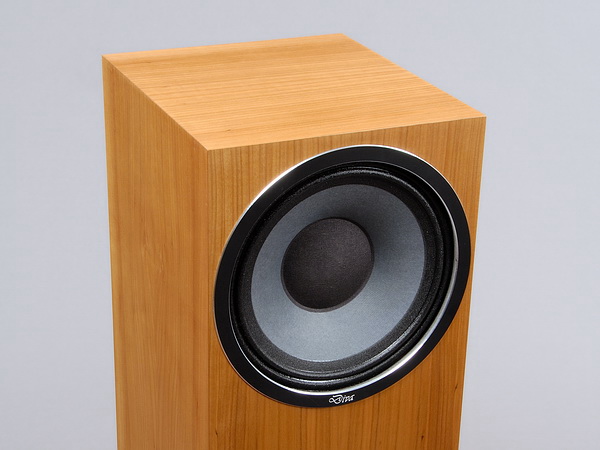
If you look closely you will see some important similarities.  Well designed hand built cabinetry, dual concentric drivers (for coherence) and tone controls feature in both designs.  

Tone controls, it seems that this has become a dirty word in modern audio.  The difference between these tone controls and the traditional tone controls you may have experienced is that these are purpose built.  Only to be used with the speaker that it was designed for.  Knowing the roll off curve of the driver allows WLM to build a tone control exactly for these speakers.  Allowing you to tune your speakers to the room, your mood and to the way we hear.  I guess room and mood are pretty self explanatory but what about the way we hear?

This is where things get interesting.  You see a healthy ear doesn't hear sound in a linear fashion.  Our perception of sound changes depending solely on the volume of playback.  There is a very interesting thread discussed here written by Alan Shaw from Harbeth.  Every speaker designer needs to take this into account during the design stage of their speaker.  Are they aiming for the listening volume to be 85dB, 95dB or 105dB.  Doesn't really sound like much of difference from a numbers perspective does it?  However for every 6dB of increase the perceived volume doubles.  So what do most designers do?  They take a guess at what they think customers will listen at.  Alan Shaw from Harbeth likes to design his speakers for a listening volume of 85dB.  That is the classic BBC monitor number.  So he designs his speaker cross-overs for this optimum.  Other designers I know test and listen a lot louder than this so they design the speaker with a different volume in mind.  So people think, what about the bass boost on your amplifier.  Well yes the theory is right, the implementation is wrong.  You see the amplifier designer is now guessing on what sort of speakers you are using for the boost.  The only way is to have a tone control specifically for your speakers. 

WLM does exactly that.  You have the ability to adjust the bass output through the use of the Diva Control or Pre/Passive Control and around the back of each speaker is the treble control.  If you are listening at high volumes bass generally fills out and loads the room without much need for the Diva Control.  Maybe +1 or +2dB.  However once volume drops down I found I could take the bass up to around +5dB to keep everything in scale.  If I want a larger bass foundation with a warmer midrange I dial it up to +8dB.  The +8dB setting is just out of this world for many types of jazz and acoustic music.    

WLM have provided flexibility for the speaker that very few  others manage to do.  Adjustments can be made so that I no longer need to listen at live concert levels to experience the full effect of a live performance.  Lower listening levels can now have all of the openness and scale of a live concert without destroying my hearing and without upsetting the neighbors through the simple use of the Diva control.


I know there are a few audiophiles who will question this type of implementation.  However I think they need to hear it for themselves.  The tone controls don't change the accuracy of the recording in any way.  They are better looked at as optimizing the performance for the volume that you listen and to allow for your room.  They do not change the tone or timbre of the performance.  For me it keeps me involved when other systems have left me feeling cold.

The Diva is a pretty simple little box that really works wonders.  Music just seems less interesting without it.  You don't need an electronics degree to use it.  It only operates in the analog domain so there is no chance of upsetting anything else with the adjustments.  It will make your amplifier work harder depending on your preferred bass setting however it isn't noticeable unless your amp is running in the single digits and you over do things.

WLM have forged their way into my hardened audiophile heart with solid musical understanding.  Transparent tone, impacting dynamics with refinement and articulation.  These are speakers for everyday.  I never tire of hearing them.  WLM have achieved something very special with these speakers.  With the combined use of the tweeter control and the Diva control there is very little music that I don't get maximum enjoyment out of.  After all, isn't this passion about getting the most enjoyment from music.  For many audiophiles this love for music has sadly become completely forgotten in the pursuit for a technical perfection that doesn't exist.


The Trafomatic Aries


It started innocently enough.  There I was reading the review by 6moons about the new Kaivalya tube amps when Srajan wrote that people should really talk to amp designers to build something specifically for them.  Well that idea wouldn't leave me alone.  The idea rattled around in my head for weeks.  Why settle for second best when I could get an amp designed specifically for the speakers I wanted to match it to?  I wanted something to match the Hoyt-Bedford's to perfection.  To have energy and speed.  To have single ended purity.  There really was just one catch.  It needed to be built to budget.  A reasonable budget, but a budget nonetheless.  No point selling well priced speakers if you don't have an amplifier that is punching in at the same level.

I emailed Sasa from Trafomatic.  I told him what I wanted.  I explained that these single drivers will expose any weakness that the amp has.  It needs to be clean, it needs to be fast and it needs to transport the emotions of the performers into the room.  The response was almost immediate and was very concise.  Sasa had already worked out the design 12 months earlier.  Single ended, Class A with EL34 tubes. 
 Low power at 6 Watts wasn't going to be an issue for the Hoyt-Bedford's with their 97dB sensitivity and very easy load.  I gave Sasa plenty of artistic license.  Build it in whatever shape you wish. I put all of my trust in Sasa to make it work.  I placed an order, sight unseen, sound unheard.  The first shipment arrives just after Easter.

After a lot of phone calls and emails from customers demanding more information for this new series of amplifiers we are very proud to release the first official photos of what we expect to be an exceptional amplifier.  Fit and finish already look to be of the outstanding Trafomatic standard.


Technical specifications are:
Output power: 2x6W

Class of operation: Single- Ended (class A)
Tubes complement: 2x EL34 , 1x ECC81
Inputs: CD, Tuner , Aux
Outputs: 8 ohms , Line Preout
Input sensitivity: 0.85Vrms
THD %: 1.55% - 1W
Frequency bandwidth: 10Hz(-2dB) -40KHz( -3dB)
S/N Ratio: 88dB
Input impedance: 100K
Power consumption: 130VA
Input voltage: 230V/50Hz( 100-120-220-240V available on request)
Size: 350x220x200mm
Weight: 12kg
RRP - AUD $1,600
My expectations are high from the very start.  Listening impressions to follow after Easter.

WLM Stella Deal

To celebrate the five star review awarded to the WLM Stella's by Digital Audio Review we are offering a Stellar deal.


If you order a pair of the WLM Stella Floorstanders over the next four weeks (starting 21st of March) you will receive a pair of the WLM Stratos Speaker Cables in a 2 metre length absolutely free.  The speaker cables are valued at $300.  If you want a longer cable length you only pay for the difference.  If you prefer you can replace the speaker cables with a pair of the outstanding WLM Lyros Interconnects with Neutrik Profi Plugs.

The WLM Stella's are available in maple or stained black maple.  Unfortunetly the Cherry finish is no longer available.


If you wish to purchase the WLM Sonata at the same time please contact us for a really outstanding deal.  A deal so hot we can't publish pricing online!


I would also like to take this opportunity to thank John Darko for spending the time to understand and learn about the WLM speakers and amps.  John certainly has a way with words, not only does the review describe the product, but the writing style he uses reflects the type of sound being produced. 


Hoyt Bedford / Trafomatic Package Deals


To commemorate the launch of the Hoyt Bedford brand of speakers we have decided to offer a cracking deal for the audio lover.

The Hoyt Bedford range produced by Louis Chochos from Omega Speaker Systems has been developed as an economical range of single driver, crossover-less speakers that get to the heart of the music in the same way as the higher Omega range.  With very attractive pricing from Hoyt Bedford the challenge was on to find a quality amplifier that do these speakers justice.


Type 1 in optional pearl black finish
 
I instantly threw the challenge out to Sasa Cokic to build me a more budget oriented tube amplifier that still has the great performance that I have come to expect from Trafomatic.  Well Sasa replied quickly and directly.  Target price was settled upon and he offered straight up, a single ended design with an EL34 tube on the output.  Sasa had designed the amp over 12 months earlier so final development was all that was left.  2 x 6 Watts with the typical Trafomatic quality transformer would be more than enough to drive the Hoyt Bedford's with their 97dB sensitivity.  The name for this new Trafomatic amplifier - Aries.

So here is the deal - choose between the Hoyt Bedford Type 1 ($995), Type 2 ($1,650) or Type 4 ($2,900).  Add the Trafomatic Aries ($1,600) and we will give you a discount of 10% on the deal.  If you need speaker cables or interconnects we will discount these by 20%.  Prices include delivery to pretty much anywhere in Australia. 

The full range of Hoyt Bedford speakers consist of a Monitor (Type 1 - AU$995 per pair), Floorstander (Type 2 - AU$1650 per pair), Subwoofer (Type 3 - AU$900) and Floorstander with inbuilt powered subwoofers (Type 4 - AU$2900). Standard finishes consist of Maple and Cherry. Optional finishes +$200.

Options for the Trafomatic include remote control +$140 and high gloss laquer finish +$60. 

This is a combination that is simply made in heaven.  Add a quality source and you will fall in love with the intimacy that this combination will create.  If late night listening is part of the diet then you are in for a treat.  Guaranteed to keep you up well after bed time.  Simply sublime.

Hoyt Bedford's won't go super low or super high but what they do is image beautifully and produce the most cohesive sound you will ever come across.  Everything they produce will be as one organic movement. 

Hoyt Bedford's feature an all new driver. It's an 8" dual cone and shares the whizzer from the ALN8Omega Alnico driver. Ferrite motor with wood damping cover. Extremely fast and articulate. 97dB efficiency, 8 Ohm impedance.

Type 1 features:
Monitor
Designed and built in house.
3/4" soft wood MDF for stability and 1/4" Hardwood MDF lamination on front and back
Ladder bracing with rear wall diffuser
Omega damping throughout.
Inset driver and attached with 8 brass machine screws and zinc inserts.
3" flared Precision Port.
System can be run sealed or vented.
Vampire multiway binding posts
Triple lead internal wiring. 2 positive and 1 negative
Best quality wood veneers used on all panels.
Phenolic sheet between MDF and Veneer
Magnet Grills.
10 Year warranty.
Size: 23" Tall x 11" Wide x 11.5" Deep
Frequency response for the Type 1 is 60 to 18KHz sealed and 48 to 18KHz vented

Type 2 features:
Same as Type 1 except floorstander
10 Year warranty.
Size: 40" tall x 11" wide x 11.5" Deep
Frequency response for the Type 2 is 50Hz to 18KHz sealed and 38Hz to 18KHz vented

The Type 3 is the Sub. It's 11 x 11.5 x 18 tall. Bottom firing driver (my own) and sealed cabinet.
The footprint in the line remains constant. This means that the option of stacking Type 1's on top of Type 3's is possible.  The Type 3 utilises a 200 watt plate amp to power the driver.  Hoyt Bedford recommend placing Granite in between.  If you order one sub and another at a later date, stacking is an option.

The Type 4 looks exactly like the Type 2 floorstander. The cabinet is chambered. On top is a Type 1 and the bottom is a Type 3. The sub sat is housed in one cabinet. The Type 4 is all set up with the wiring all you need to do is plug in the powered sub unit, plug in speaker cables and you are ready to go.  The Type 4 will play the most musical bass from 30Hz and will go up to 18KHz.


The Principles of the WLM La Scala's

Sometimes a product comes along and positions itself as a no compromise solution between solid engineering principles, old world craftsmanship and a balance on the right end of the money scales.  This is what the WLM La Scala's have presented themselves to be for me.

The La Scala's retail for AUD $4,685 including delivery. For this you get a speaker that can be considered more musical instrument than loudspeaker.  As soon as I unpacked these beauties I realised how underrated the finish appears in photos.  As a woodworker myself, I can vouch that the finish on these speakers is flawless -  crisp edges, clean without being sterile, tight corner joints and an eye for detail on all surfaces.  Quality furniture-grade craftsmanship on the outside but I was questioning if they had the goods on the inside.

With a frequency response of 30Hz to 25kHz this speaker will produce everything but the very lowest of low notes.  The  La Scala's opened my eyes (and ears) to what a truly musical speaker sounds like.  This isn't a fragile little flower but rather a razor-sharp surgeon's knife on the end of a conductors wand, with the arm of a heavy weight boxer.  It is lightening fast, dynamic and most importantly, it produces the timbre of instruments in a way that is detailed, transparent and wonderfully musical.  Sound staging is open and large when required and intimate and close when the recording reflects it.  The bass output of these speakers is possibly the most musical and open I have ever come across.  A stringed bass for me has never been reproduced with such texture and depth.  Once this has been experienced it is almost impossible to go back to anything else.

The La Scala's are just begging to be driven with well-made dynamic tube amps where 30 watts is more than enough.  With a sensitivity of 93dB for the floor standers and 91dB for the monitors, tube amps and WLM are just a match made in heaven.  With this high sensitivity the La Scala's respond with outstanding dynamics and speed.

I didn't even think about it until it was pointed out to me, just how unusual the tweeter looks for the La Scala's.  At first I almost took this as a bad thing but then it really struck me how much this type of tweeter makes sense.  This stiff paper cone tweeter marries up so well with the treated paper cone mid-range / woofer that I started to wonder why others haven't been using this type of arrangement.  It is simply seamless. 

So why did WLM choose to use paper?  After extensive tests, the team at WLM concluded that paper is the optimum material to balance the demands of mass, stiffness and resonant behavior. WLM have very high expectations on what they can achieve especially with resonant behavior. No driver made is utterly free of breakup modes or resonances. Hence it's not just distortion reduction that's vital but the spectral distribution of said artifacts. Here paper turns out to be harmonically more benign than other materials.  It also works well in the WLM ethos of using natural materials in all aspects of production.  To my ears not only did they achieve their objective, they hit the nail firmly and directly on the head.


One of the big selling points of WLM is the room integration accessible on every level of the product range.  From basic tweeter and bass controls through to full-blown active modules, the WLM speaker range are made to adapt to your listening environment.  For the La Scala's, this begins with a tweeter control positoned on the back panel of the speaker.  This control adjusts the tweeter output by 3dB either way.  I found this particularly handy when listening to certain classical tracks where the high frequency at high volumes, especially through high pitched violin sections that had been recorded with an exposure to this level, was just too much for my ears and room.  It was just a simple case of dialing the tweeter control back -2dB and I was in heaven.  The second control is through the use of bottom port tuning rings and adjustable spikes to help control the bass output.  For my room the rings weren't needed however in smaller rooms I could see straight away how much this can help people achieve the best balance for them.  With the port wide open I opted to keep the spikes at a minimum height to avoid bass boom.  Our room is by far the biggest factor in affecting the sound and yet most of us stick our heads in the sand and try to ignore the fact.  We change gear on a continuous merry-go-round, never being completely satisfied with one or the other.  With WLM you can tweak the speakers to suit the room.  Hell - you can tweak the speakers for each record by the simple turn of a dial.  This may not be seen as the purist minimalist approach but very few rooms I have ever come across support the complete purist ideal.  After all, most of us have our beloved hifi systems in the main living room of our homes, providing the beauty of high quality music in the most comfortable area.  The last thing our other halves wish for is a room covered from head to toe in acoustic treatments.


The front end I ended up using and enjoying the most is WLM's own tube amp (Sonata) and pre-amp (Linea).  These provided the perfect combination of tube texture and harmonics with outstanding dynamics and bass control that only a robust and well-engineered power supply can provide. 


These amps are designed and developed by Sasa Cokic from Trafomatic Audio in conjunction with the team from WLM, so it is hardly surprising that this combination is so palpable.  This WLM trio can play to frightening loud levels with no hint of cone breakup.  I backed down much earlier than they were willing to.  Serious party speakers for the astute listener.  One of my favorite statements from WLM is that they didn't want to design amps that play loudly, but rather have amplifiers that are designed to sing loudly.  It may sound like a simple separation but when you dig deeper, this statement covers the whole ethos of WLM.

The WLM combination of amps and speakers is by far the best I have come across in a very long time.  Synergy, timing, dynamics, high SPL stability, precision and passion are all present and accounted for with no one element being the overriding principle.
This is a speaker that can compete with others in higher price ranges and provide music the way it is supposed to sound.  Real, alive and emotional with no overpowering sonic signature of their own.  Just the way I like it.

Trafomatic Experience Two - 300B Integrated Amplifier


Ah the 300B tube.  Most revered by tube loving audiophiles where the use of words such as magical and mesmerising get thrown around so often you wonder if this type of amp is some sort of be all and end all in the holy grail of audio amplifiers for those seeking the magic touch of liveliness in their music.   


More than the fair share of people who are interested in this type of amplifier purchase or get to hear a less than adequate version and come to the realisation that it really isn't that flash.  Why?  Because the sound is as thick as syrup, slow moving and sickeningly sweet.  Not to mention that the bass lacks any real control or the ability to really provide any low down dynamics.  Especially if you come from the up bringing of a solid state this is going to be so hard to digest that most will never return to tubes.  Which is a real pity because it really isn't the tube that is the problem.  In most cases (other than poor circuit design) it is the power supply and associated components that Trafomatic refer to as the "iron" that is the problem.

So what is the "iron".  The iron is all of the mains transformers, power supply chokes and interstage and output transformers. This is quite literally the heart of any tube amplifier.  In this context the tube can be considered the soul.  In this specialised sector, real advances are not derived from exotic and expensive transformer core materials. Real advances come from how well the winding geometry of each transformer is adapted to its particular application and circuit juncture. Ultimately the quality of tube hifi is a direct reflection on the circuit designer's transformer winding craft. And that is the crux of the matter and the particular distinction for Trafomatic. Most tube audio designers are not transformer experts. They rely on generic off-the-shelf iron because they can’t wind their own. Trafomatic custom design each and every transformer that goes into Trafomatic Audio products and wind it themselves. It’s the polar opposite to the one size fits all approach.


With this background information and many hours of critical listening I chose to become the Australian and New Zealand distributor for Trafomatic.  So why did I make this decision?  Well it is quite simple.  Trafomatic produce quite possibly some of the best tube amplifiers around at prices that don't have you remortgaging the house on.  The Experience Two proves that the extra lengths that Sasa Cokic and his team put into every part of the iron, the circuit layout, the attention to detail and the impecible finish is very well worth the asking price of this amplifier.  The performance really will change experienced peoples opinion of tubes while new comers will be treated to an extraordinary musical experience that will show the tone, textures and imaging that good tube design possess.


There is a review currently out that explains the great virtues that the Experience Two has and if you are interested in this amplifier I would encourage you to read this review.  The reviewer hits the nail on the head in many ways, however I do think one point was missed concerning this amplifier.  One star rating was removed due to the price which in ways was disappointing.    I believe that the price for the amount of incredible design work and implementation is well worth the asking price (however I am biased and this needs to also be taken into account).  If it is compared to a cheap Chinese amp then it will look expensive however this isn't a run of the mill tube amp.  This is an old world amplifier with modern thinking and implementation for people looking at having ownership for many years to come.  An item that is a keeper in this swap in, swap out world of consumer audio products.  A product that will still be running strong long after many others have been thrown to the scrap pile.

Omega Speakers awarded the very first DARKO award


Omega Speakers have been awarded the very first DARKO (Digital Audio Review Knock-Out) award.  Read the review here - http://www.digitalaudioreview.net.au/index.php/audio-reviews/speaker-reviews/item/110-omega-super-6-alnico-xrs-extended-room-speakers

This is a great confirmation of everything I enjoy about Omega Speakers and why I love selling them so much.  The Super 6XRS holds the fine balance between reasonable priced speakers and really great performance.  Coupled with the Trafomatic Experience Two and you will be mesmerised by the sheer beauty that this combination creates.

Congratulations goes out to Louis at Omega Speakers for such a great achievement.

About The Music - Harry Manx Live

Before reading the following entry please open the link in a new window, hit play and then read on.

I thought I would share something different in this blog entry.  In fact, in a lot of ways this is the part I have been looking forward to putting together the most.


I want to forget about writing about the products I sell for a while and talk about what I enjoy most - the music.  For my first entry for About The Music I would like to write about a great live performing artist that my wife - Danielle and I went and saw.  This is the first live venue we have been to since the birth of our first child (over 20 months ago) so you could say it has been a long time between drinks.  I first heard of Harry Manx through last.fm and had pretty limited exposure to his music, so I thought it was the perfect way to get back into seeing live music.  No expectations, limited exposure and enjoying being out on the town was the perfect recipe to really enjoy this performance.


Harry isn't the sort of performer that is going to smash your ear drums into oblivion or wow you with pyrotechnics or a hammed up performance.  His craft is much more subtle than that.  This is a man who strives in playing live music in a spiritual and emotional manner while having great respect for both the eastern and western styles of music.  Utilising an array of instruments from 6-string guitar, lap slide guitar, banjo, harmonica and a 20 string weapon of choice the Mohan Veena, Harry is in the unique position of crafting well written songs and producing great musicality that draws you completely into the performance.  His song writing skills complete the circle to create a musical performance that is very special to witness.


Harry blends the most unlikely of genres together to create his own easily recognisable style.  Intertwining traditional acoustic blues with the hypnotic sounds of India, Harry has managed to create a style that can spellbind you into being anchored in to your chair for the whole performance.  His version of Voodoo Child played with a banjo is just the proof needed to showcase the skill that Harry Manx possesses as a fine-tuned live performer.


If you get the chance check him out, it is well worth the price of admission.  Harry Manx Live - Outstanding live performance for people who appreciate the subtle sides of a great musician.

Want to share your music experience?  Contact via email and we will post well written articles on this site.

WLM La Scala's are on the way

After a lot of deliberation, research and reflection the first pair of demonstrator WLM speakers are on their way to Australia.


I have always had the desire to offer the best value for money and the best match for other components that I sell.  It is for these reasons that I have decided to bring the WLM La Scala's into Australia.  So why have I chosen to bring in WLM? The primary reason has to do with their reported synergy with Red Wine Audio.  In fact, Red Wine Audio are the distributor for WLM in the US and one of the main men behind WLM, Hannes Frick, also sells Red Wine Audio in his homeland of Austria.  There is already an established relationship between these brands.  Secondly, while researching the brand, I discovered that WLM have a lot of the same beliefs that I have when it comes to audio equipment.
- Offering value for money - while they will not be considered the cheapest speakers in the market, they will be considered outstanding performers in their price category 
- The ability to design and produce highly acclaimed speakers, tube amplifiers and state of the art cross over networks (not just another speaker designer who has no understanding of amplifier design or another amplifier designer who has no understanding about speaker design)
- Classic design principles without all of the bright lights and gimmicks that you pay for today and forget within the first few weeks of use

- Solid engineering design, while taking advantage of unique design ideas ranging from adjustable tweeter control to full speaker bandwidth control
- High sensitivity, so that you have complete choice over the type of amplification you prefer including low power tube amps
- A preferance for natural sounding audio reproduction
- The use of natural materials and the quality of workmanship that this demands
- Using what sounds best to the design team and not offering the latest and greatest driver just for the sake of it
- Offering products that range from basic speaker designs right up to very high performing reference speakers within the industry
- The belief of pushing the performance of their products in each price range
- Most of all they have the belief that they are offering worldclass speakers and amplifiers for the astute listener


Will I absolutely love them?  That will be answered pretty soon.  I have purchased this demo set sight unseen and completely unheard.  Sometimes you have to take risks to reap rewards.  Full report coming soon!

Red Wine Audio LFP-V Editions are here!

In the Hi Fi world there always seems to be this habit of updating a product without really updating it. No intention of actually improving the product for the sake of improvement, but rather for the sake of change. I have always disagreed with this as customers can easily see through the tactic and become disillusioned with any "progress" that is made.

However there is always that rare designer out there who isn't interested in improving the product by a small, almost immeasurable margin, but rather strives to make a significant improvement that reflects the respect they have for the original design without being completely tied down by it. One of these rare men is Vinnie Rossi from Red Wine Audio. Every step he makes is for the benefit and improvement of the product.

His latest round of upgrades bring not only a performance step forward but they also bring a convenience for main stream users of his battery powered amps and DAC's.

As soon as I mention battery powered amps and DAC's to some people I can see their eyes glaze over and interest is lost. Why? I guess people see batteries as unreliable and not powerful enough to be used in a great sounding amp. And yet they seem to forget that they start their car with a battery everyday or that you have the ability to weld sections of steel together with the power that batteries can posses. We have been told so often that more power in an amp equates to better performance and sound that we have lost all perspective on what really matters. Articulation, accuracy, realism, tone, current delivery -these are the things that matter in good amp design. Coupled with reasonably sensitive speakers and you have a match made in heaven. In fact, for the cost it can become very difficult to beat indeed.

With the introduction of upgraded batteries, a new SMART charger and a valve for buffering purposes, Vinnie is striving to push the performance of his products to an all-time high.

These improvements are one of the reasons I enjoy promoting and selling his product. I can be confident that he is doing the right thing for future customers while offering an upgrade path for previous customers. For me this shows the greatest of respect for everyone involved. And respect is what it is all about, without respect in this business we have nothing. I just wish more people had the drive and vision that Vinnie has to keep people interested in great audio.

The new range of amps and DAC's is now available at no extra cost. That's right, no extra cost for significant improvement in usability and performance. Now that is what I call respect.

You can read all about the technical upgrades for the Red Wine Audio products at http://www.redwineaudio.com/